
Diocesan Synod of Meath & Kildare 2025
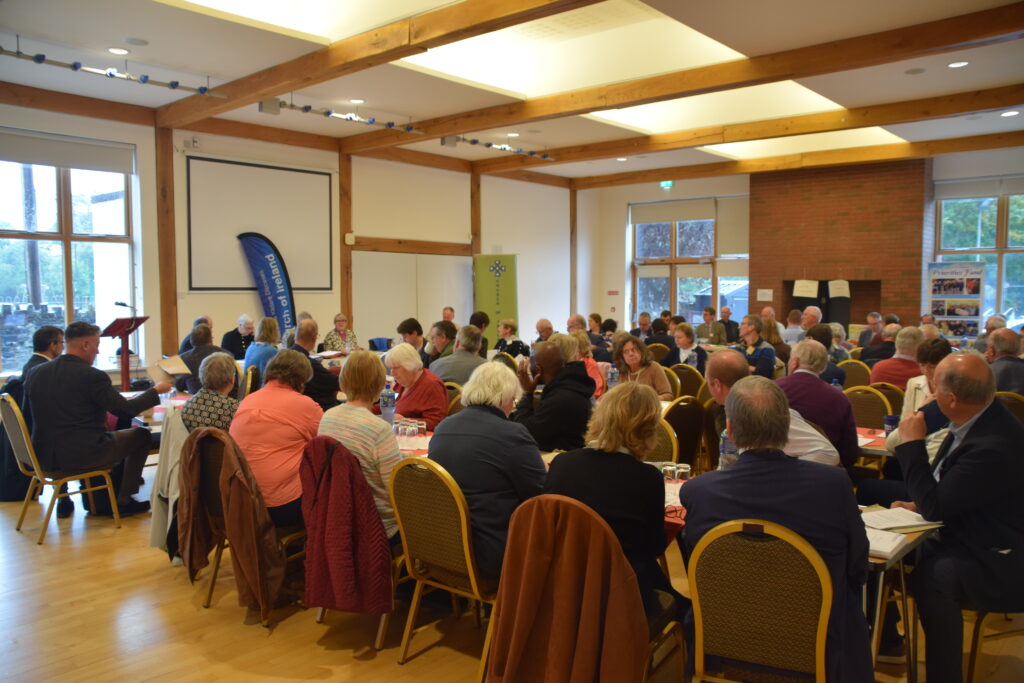
The annual Diocesan Synod for Meath and Kildare took place on Saturday 27 September in The Oaks Centre, Dunboyne, with Bishop Pat Storey presiding.
Worship and welcome
Synod began with a Celebration of Holy Communion in nearby St Peter’s Church, led by Bishop Pat. This time of worship set the tone for the day, reminding members that prayer and fellowship lie at the heart of all our diocesan life.
This Synod also marked a first for Archdeacon Katharine Poulton in her new role as Archdeacon. The Assessor for Synod business was Mr Garrett Casey.
Bishop’s Address
In her Presidential Address, Bishop Pat opened with a call to see the dioceses not in isolation but as a shared body—where parishes support one another through vacancies, challenges, and new beginnings. “We are in it together,” she affirmed, reminding us that faithfulness, not perfection, is our calling.
A major announcement was the launch of a new pioneer ministry based at St Brigid’s Cathedral and in Athlone and Clonmacnoise, led by Rev Philip McKinley. This initiative will engage those who have left or never attended church, with support from Dean Isobel, Rev William Steacy, Rev Trevor Holmes, and the diocesan pioneer hub.
New clergy were welcomed: Rev Lesley Robinson (Mountmellick Group of parishes), Rev Ian Horner (Mullingar Union), Rev Sean Murphy (Geashill Union and Tullamore Union), and Mr Cennis Chikezie (Intern in Navan). Katharine Poulton was introduced as our new Archdeacon, succeeding Archdeacon Leslie Stevenson. Earl Storey was thanked for his years as chaplain to the defence forces and diocesan communications officer, with Jenny Horner now stepping into the DCO role, from 1st October.
The bishop acknowledged the post-Covid challenges facing parishes, expressing deep gratitude for continued financial commitment and charitable giving. Special mention was made of Edenderry Union of parish’s resilience, and heartfelt condolences were offered to Rev Sarah Marry on the loss of her daughter, Ella.
A new diocesan partnership with Habitat for Humanity was launched: the “Buy a Brick” campaign to support housing and sanitation projects in Malawi. Each church will receive a symbolic brick to encourage prayer and fundraising, with Jenny Williams, CEO of Habitat for Humanity Ireland, presenting the initiative. (See below).
Bishop Pat also celebrated the Church of Ireland’s presence at the Ploughing Championships, with thanks to Tullamore parish for their hard work. The bishop closed with a message of hope: “If we walk closely with God, listen to His will, and share His love, the harvest will come.”
Thanks were extended to diocesan staff, secretaries, treasurers, churchwardens, and schools for their tireless service.
Reports
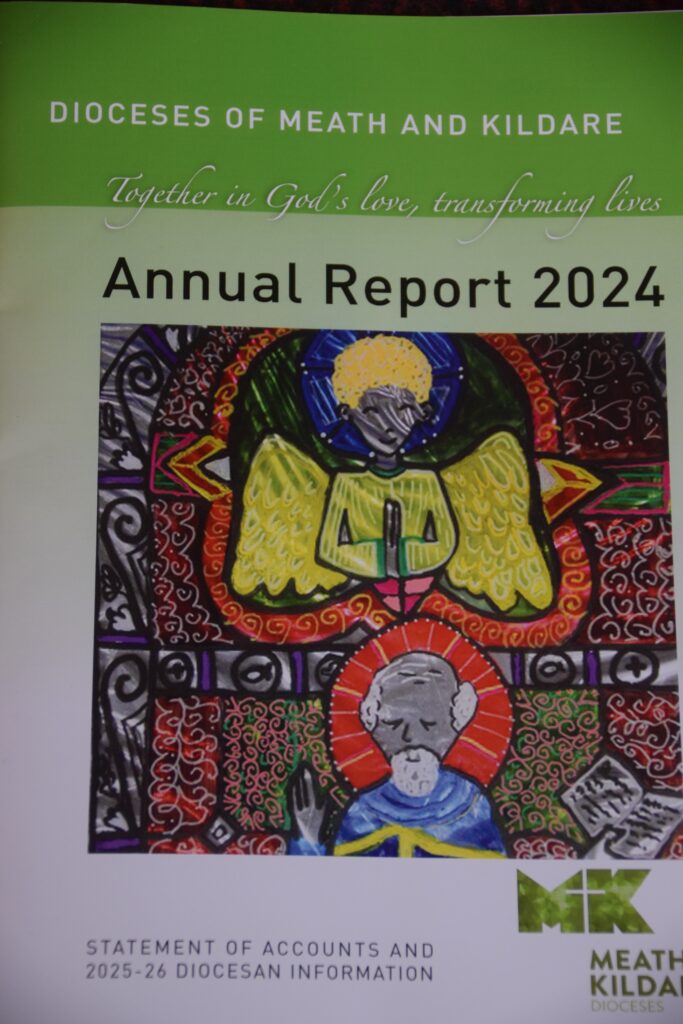
After this, Synod heard the Diocesan Council Report and Statement of Accounts, presented by Rev Philip McKinley. He highlighted good work that was taking place across the diocese that expressed something of the mission God has called us to. This included work on climate change and addressing the challenges of racism. The Archbishop of Armagh has made addressing racism a key issue. He highlighted the importance of work being carried on that helped bring light in an increasing polarised and a divided world.
The report was seconded by Mrs Rhonda Willoughby. The tone of her speech was reflective. She reminded attendees of the clarity of our diocesan vision – “Together in God’s love, transforming lives”, and of the importance of diocesan structures in overseeing much of this work. She said that the report was one that was “both clear eyed and visionary” – that we are not a church just managing decline, but looking to pioneer into the future, whilst valuing the foundations on which this is being built.
The speeches were followed by discussion and contributions from the floor. These included comments on some of the following:
- Appreciating all those involved in children’s and youth ministry. The increased numbers of people completing Safeguarding training reflected an increased number of volunteers involved in this important ministry.
- An acknowledgement of the amount of money being given by parishes across the dioceses to mission good causes.
- An observation of the growth of pioneer ministry as well as a revisiting of ancient Christian spiritual practices. Our dioceses includes very noted places of ancient Christian worship.
- The contribution of the Church of Ireland Priorities Fund.
Building Hope Brick by Brick
One of the day’s highlights came when Synod members voted to suspend Standing Orders to welcome Jenny Williams, CEO of Habitat for Humanity Ireland.
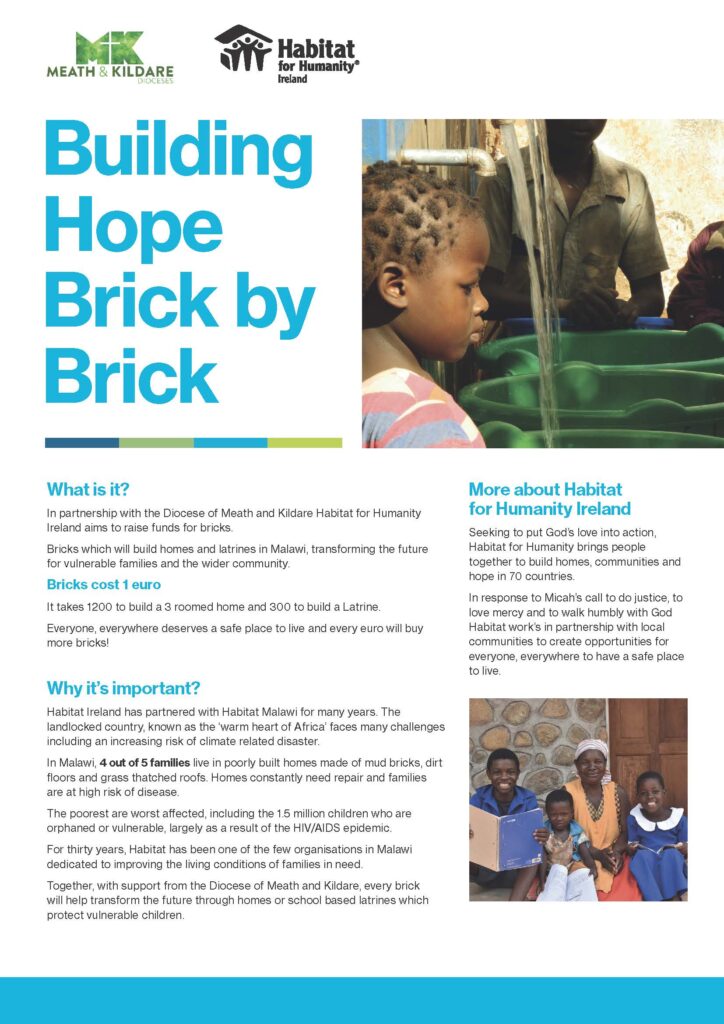
Jenny introduced an inspiring new diocesan partnership: “Building Hope Brick by Brick”. This project aims to raise funds for bricks that will build homes and latrines in Malawi, one of the poorest countries in the world.
- 1 brick costs €1
- 1,200 bricks build a three-roomed home
- 300 bricks provide a safe latrine
Every single Euro raised will go to work in Malawi.
Each euro donated will buy another brick, offering safety, dignity, and hope to vulnerable families and communities.
Malawi, often called the “warm heart of Africa”, faces enormous challenges, including climate change, fragile housing, and the ongoing impact of the HIV/AIDS epidemic, which has left 1.5 million children orphaned or vulnerable. Over half the population live below the poverty line.
The aim of the project is to provide affordable housing, latrines and other initiatives to enable people to live healthy lives, with hope.
By supporting this project, Meath and Kildare Diocese joins Habitat in their mission to ensure that everyone, everywhere has a safe place to live.
To find out more about ‘Building Hope brick by brick
Report of the Diocesan Board of Education
Synod heard the Report of the Diocesan Board of Education, presented by Canon John Clarke. He recorded appreciation for the hard work of so many, often in the background, in enabling the work of the Board to continue. He also expressed gratitude for the “enormous amount of work that takes place in our schools”. He congratulated St Peter’s School in Dunboyne for the opening of their new school premises, and also to Charleville for the opening of their new unit. He also noted the appointment of a new School Patronage Officer in the Representative Body. He highlighted the work of the Board was in endowments and property.
The report was seconded by Mr Cillian Hales. He talked of the importance of the support of the Board in supporting National Schools across the diocese. He talked of the financial pressures of rising costs that lead to shortfalls. However, he said that Church of Ireland National Schools remained a “great place to work” and a place of inspiration.
Subsequent discussion from the floor highlighted the inadequate funding for our National Schools, and the pressures this presents.
Pioneer Project
Rev Philip McKinley gave an overview of Pioneer Ministry. It has its roots in the commitment of General Synod. In 2023 Pioneer Ministry was officially launched at a service in St Patrick’s Cathedral, in Dublin.
To date there are 15 pioneer ministers across the Church of Ireland. Each project takes on individual and different themes, to pioneer new forms of ministry.
Rev Philip McKinley will lead the ‘Community of the Celtic Cross’, based in the parish unions of Kildare and Athlone. He will be commissioned at a special Service in St Brigid’s Cathedral, Kildare on the evening of 29 September.
Every diocese has as Pioneer Hub and Advocate to encourage pioneer ministry across their diocesan area. Rev Trevor Holmes is our Diocesan Advocate.
New Liturgical Resource
Canon Ricky Rowntree made a presentation on a new Liturgical Resource for children and young people within parishes. In the future this resource will include materials for families to use at home. One complimentary copy of this substantial resource is being given to each parish.
Coffee and Lunch
Before the official business of Synod got underway, representatives had the chance to catch up over coffee. Later, members took an opportunity to enjoy a lovely lunch together. It was a relaxed and friendly way to reconnect, share stories, and strengthen friendships.
Adding to the day were the many exhibitors from across the Church of Ireland. Their stands brought an insight into so much good work that is going on, and Synod members had time during the lunch break to browse, chat, and learn more that work happening throughout the Church.
With gratitude
We are deeply grateful to all our office holders and representatives who give so generously of their time and gifts throughout the year. Special thanks go to Ms Karen Seaman, our Diocesan Secretary and to Mr Garrett Casey, who acted as Assessor during the business sessions.
We greatly appreciate the presence of exhibitors from a wide range of organisations across the Church of Ireland.
Our thanks also to the parishioners of Dunboyne and Rathmolyon for their warm welcome and hospitality, and to all who worked behind the scenes to make Synod such a well-organised and fruitful gathering.
What is a Diocesan Synod?
Every Church of Ireland diocesan synod consists of the bishop, the beneficed and licensed clergy of the diocese, and elected lay members from parishes across the dioceses.
The Synod meets under the presidency of the Bishop and has responsibility for many aspects of diocesan life. Among other duties, it elects the Diocesan Council (the executive committee of Synod, with both lay and clerical members). Every third year, Synod also elects clergy and laity to represent the diocese at General Synod, the national decision-making body of the Church of Ireland.
The Diocesan Synod was a day of worship, thanksgiving, and vision — a reminder that together, we are called to build up the body of Christ locally and globally, brick by brick.
To view a gallery of photos of Synod, visit our diocesan Facebook page.